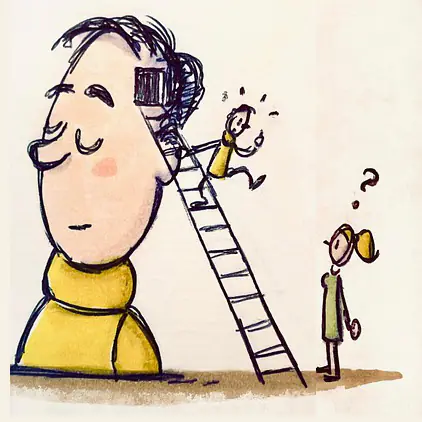
When the Side-Effect is the Answer: A Surprise in Personal Somatic Work
When you do successful somatic work that combines the unifying ingredients,…

Expert therapy and coaching to resolve your personal triggers and limitations.

Evening and weekend times to fit your life, not the other way around.

Convenience of telehealth so you can attend from anywhere, anytime.

Works seamlessly with Hispanic and mixed-culture couples (basic Spanish spoken).

Text or phone contact so you’re never left stranded.

Learn practical techniques without a formal therapy commitment.

Your authentic sexuality is part of your wellbeing.
Robert A. Yourell, LMFT
Extensive Experience and Specialized Skills
I have advanced training in processes that resolve triggers that cause us to over- or under-react, as well as working with relationships and helping families with out-of-control teens.
I have worked in the mental health field for many years in fascinating roles, from providing psychotherapy to serving as program director. My clients have included police, military, executives, and the public. I have provided presentations and consultation for businesses, academic institutions, and government agencies. I am a licensed marriage family therapist (California) and earned my masters degree in counseling psychology from Norwich University.
Testimonials
Exceptional
Mr. Yourell is an exceptional individual and professional, and I enthusiastically give him high recommendations.
Susan Goodell, MA, MS, MFT. EMDRIA
Certified & Consultant. EMDR/HAP Facilitator (ret.)
Astute, Personable, and Responsible
I find him to be quite clinically astute, personable, and responsible. I am acquainted with a number of other mental health professionals who have spoken highly of him in this manner as well. I believe he will be an asset to any clinical endeavor that he undertakes and highly recommend him to you.
Dianne Ruth, Ph.D.
Consultant, Coach
Quality Service
Your commitment to clinical standards, good communication, maintaining priorities, and ensuring quality service delivery to patients was very evident during this period. This was a difficult change to manage and your personal contribution enabled the effort to succeed.
David Lundberg, Contract Analyst
County of Santa Cruz
A reliable partner delivering mental health expertise and consultation to respected organizations.

You are clear on “Where am I going and how do I get there?” so you can make progress without spinning your wheels.

Modern, evidence-based methods blended into an approach that works smarter, not harder.

I have worked with military, police, and top executives facing high-pressure, addiction, and trauma.

I have personally succeeded with these methods—no hypotheticals.

Advanced use of EMDR, hypnosis, somatics, and emotion-focused therapy.

I am experienced in emergency support and coordination.

The process and skills you learn become lifelong self-care strategies, not just temporary fixes.

I actively guide your progress so you have real solutions.

Learn actionable tools to defeat challenges—not just insight.

Tackle current problems with skills you can use immediately.

Clear endpoints so therapy doesn’t drag on forever.

Use latest memory science to overcome trauma without retraumatizing yourself.

Rewire your brain so you respond naturally—no exhausting self-control needed.

Therapy goals include not just eliminating anxiety but leveling up your whole life.

Tap into untapped inner strengths that have been waiting to help you.

Experience relaxation by letting go of unconscious tension that’s been draining you.
Do you have “off-target” reactions that don’t always match what you really value? Do you think of what you “should have said” after it’s too late? Do you fall into violence, submission, or withdrawal; anxiety, depression, or confusion? That disconnect can leave you feeling frustrated, embarrassed and at a disadvantage—but a sense of balance and confidence is within reach.
The secret to this is often “trigger resolution.” Advanced techniques can dramatically change your reactions. Ask about how triggers can be resolved and generate an “on-target” way of life.
Love can be fragile or lose its energy because your issues bump into your partner’s or other family members’ issues. Multiple methods for studying families and lovers have revealed key ingredients for achieving a healthy, fulfilling relationship that are within reach.
There is even a common-sense program for helping out-of-control adolescents move into a constructive role in their families. I also have much experience with developmental disabilities.
Job #1 is to understand the challenges so we can create an effective plan.
Anything limiting you, such as trauma or assertiveness issues must be addressed so that you can move forward confidently. You may be surprised at how achievable this is.Even symptoms that won’t let up like depression, long-haul Covid sickness, or chronic pain can respond to this modern blend of methods that “switch off” symptoms that have been stuck “on.”
I draw on my experience as a nationally-certified Employee Assistance Professional to consult with management or staff on a variety of issues including mandatory referrals.
I train individuals and workgroups on reducing stress using advanced methods that go well beyond mindfulness and breathing.
While most therapists strive to stay current with evolving research and skills, it’s essential to find one that makes this commitment a cornerstone of their practice.
Watch out for red flags like a therapist stressing how hard it is to change or who jumps to conclusions about your diagnosis. Advanced therapists understand that their influence must be positive and right for you as an individual. They know you want to build genuine momentum and progress.
Your therapist’s policies should fit your life. Things like evening and weekend hours, responsive communication, and video sessions should be in place when you need them.
Therapists helping with serious symptoms and challenges should have modern skills that address the most fundamental ways that people change—and they should be able to explain the process and the tools they use to your satisfaction.
Areas most in demand
Patterns: Repeating conflict or loss of intimacy is addressed on multiple dimensions. My methods (below) such as EMDR and attachment work can have a dramatic effect on patterns of conflict by changing how we spontaneously respond to emotional triggers.
Out-of-control adolescents: I have experience in direct care and clinical coordination of residential facilities for emotionally troubled adolescents. A common-sense behavior program shifts your child’s attitude and puts you in charge.
Developmental disability: Much experience in case management and training for families.
Medically unexplained or long-term symptoms: My combination of methods (next section) are helping people with symptoms that have become long-term, including depression, long-haul sick feelings, depression, and anxiety.
Difficult People: Handling difficult people at home, at work, or elsewhere: It is very important for us to decode their behavior and make a plan and guide for your next steps; one that makes sure you will be safe, sane, and moving forward in your life. Many people also need a plan for recovering from the effects of the relationship.
Unequal Relationships: When you realize that you are the only one sincerely working on the relationship.
Over- or Under Reacting: Upgrading how you respond to troubling behavior: There is a variety of methods resolve problems with over- or under-reacting or not knowing what to say or do in the moment. The result is mental agility and creativity.
Other issues: Since I have served in a variety of settings, I also work with issues of Ageing, trauma, grief, and addiction.
Upgrading Responses to Challenges: You can learn methods like “de-triggering” that can eliminate triggered emotions, freeing you to spontaneously use more creative and powerful responses.
Difficult People and Staff in Organizations: Having been a nationally-certified Employee Assistance Professional, I have extensive experience consulting with management.
Common Challenges I Help With
This method helps resolve “triggers” that cause you to over- or under-react. (EMDR = Eye Movement Desensitization and Reprocessing)
This body-mind approach greatly improves effectiveness because it handles stress and emotional reactions.
This is one of the best ways to improve patterns in couples by eliminating the feedback loop that increases conflict and misunderstanding.
This modern approach to hypnosis is about getting into the state of mind necessary to do the methods really helps people move forward in therapy.
This works with thought patterns in a way that opens up space for responding creatively and powerfully to personal and business challenges. (CBT is Cognitive-Behavioral Therapy)
Two sessions: Evaluation of your situation and recommendations for your ideal directions plus follow up call to discuss progress.
Gain clarity as to your situation and get a sense of direction and perspective.
Four sessions: Direction Package PLUS core process work and recorded process based on your needs to use at home for continued progress.
Gain a valuable skill for a lifetime of use.
Ten sessions: All the previous PLUS a full round of work on your situation based on goals that we set.
Provides time for extended work on key goals, including targeted "de-triggering" for enhanced emotional stability.
Sessions Sets ◇ Free Consult ◇ Contact
Set of Sessions
Free initial consultation
Sometimes you need to work on a crisis right away, whether it's a situation or just feeling really bad. In these cases, the assessment might be a brief part of the first session. During the rest of the session and afterward, I can continue to assess based on how you respond to treatment and any questions I work in.
Usually, you want to have a thorough assessment up front so we don't jump to conclusions, and everything important is being considered. Most of the time, the assessment mainly takes place in the first session, unless things are really complicated. Of course, while doing therapy, new information or thoughts may come up, and this helps us decide how to continue and if any changes in our approach are necessary. I'm saying "us" and "our" because you're totally involved in decisions about treatments. That's a key principle in the ethical requirement of "informed consent."
Research on telehealth shows that it is as effective as face-to-face sessions for many people, and it has its own advantages. Here's how it works:
I'll send you a link. When you click, it takes you to the video page. I get notified that you have arrived, and I'll start the session. I use high-quality equipment to make sure we can see and hear each other well.
There is no late cancellation fee for emergencies. I’ll trust you to tell me if you had to cancel because of sudden illness, traffic accident, etc.
If you aren’t sure about your ability to always stick to your appointment times, you might like this option: We could make the appointment less binding. That means late cancellation or rescheduling does not result in any fee. But the time slot is also not locked in for me. If one of my clients really needs that time slot, then they get first choice. Of course, I will notify you that we need to reschedule. I offer this because I often work with people who are recovering or under extreme stress, who may get confused or forgetful.
This problem brings a lot of people to see a therapist. There are many things we can do that will make a difference.
First, we must address any safety issues. This includes not just risk of violence, but also making sure that the situation does not stress you out, because you must be able to stay healthy. It's also important that you aren't exposed to legal issues that could come from their behavior.
If you choose to stay in the relationship, then we must understand what drives your partner's behavior. Our plan comes from that understanding. It will help you make decisions like: "Can I really influence and improve my partner's behavior?" and "How do I be myself if they can't handle it?" and, "Where do I draw the line and how do I back that up?"
We will likely work from the idea that you are the more mature person, and you need to learn ways to influence that can guide your partner's behavior. We must make sure that this is a good approach and not just jump into it.
This was a brief overview of an issue that can be complicated, but I hope it gives you an idea of how I work with this type of situation.
I don't accept insurance, but I know the economy is very difficult for many people. I always keep some appointment times open for people who truly need a sliding scale fee or one of my discounted sets of sessions.
To see more frequently-asked questions, go here.
You can also send a message.
Blog News
When you do successful somatic work that combines the unifying ingredients,…

Sign up for our newsletter to stay informed about the latest updates, & exclusive offers